 America
For most people the QUINEAR Leg Recovery System is the best compression boot — sequential chambers, a real pressure range and the biggest owner base in the class. The Hyperice Normatec 3 is the pro-grade pick if the refinement is worth the premium to you, and the FIT KING system is the best budget way in.
How These Picks Were Chosen
Chamber count and true sequential operation first — cheap boots inflate all at once, which defeats the point. Then pressure range and adjustability, boot length against real leg sizes, pump noise, and session controls. All three picks are dedicated sequential recovery systems, not heated leg massagers wearing the name.
1. Best Overall: QUINEAR Leg Recovery Compression System
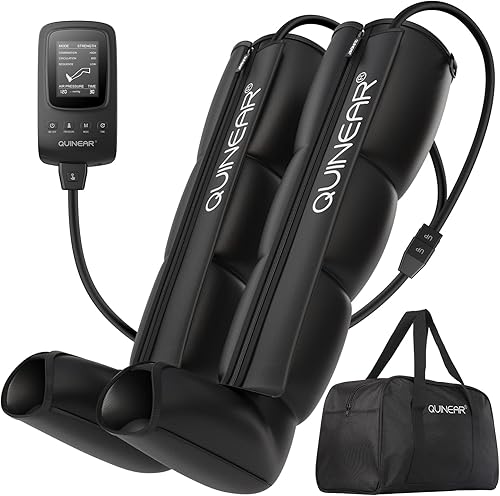
QUINEAR Leg Recovery Compression System
QUINEAR · 4.5★ from 1,873 verified ratings
- True sequential chamber compression
- Multiple modes and pressure levels
- Full foot-to-thigh coverage
- Largest review base among real recovery systems
- 4.5★ across nearly 1,900 ratings
Why we picked it: QUINEAR does the thing that matters — genuine sequential compression that milks pressure from the feet upward — with enough pressure at the top end to satisfy heavier training loads, and it does it with several times the owner history of any other affordable system. The pump is louder than a Normatec and the boot materials are simpler, which is the honest entirety of what the price gap buys elsewhere.
2. Best Premium: Hyperice Normatec 3 (Legs, Standard)

Hyperice Normatec 3 (Legs, Standard)
Hyperice · 4.5★ from 593 verified ratings
- The system used by pro teams
- 7 pressure levels with ZoneBoost
- Precision overlapping chambers
- Quiet control unit, app support
- FSA/HSA eligible and TSA-friendly
Why we picked it: Normatec is the boot everything else imitates, and the differences are real if secondary: quieter, better-shaped chambers that overlap so no strip of leg gets missed, finer zone control, and app scheduling. Whether that is worth several times the QUINEAR's outlay is a personal call — the underlying physiology is the same. If you recover daily and can spread the cost across years of use, this is the nicest version of the product that exists.
3. Best Budget: FIT KING Air Compression Recovery Boots (Full Leg)

FIT KING Air Compression Recovery Boots (Full Leg)
FIT KING · 4.5★ from 1,012 verified ratings
- Sequential compression modes
- Full-leg coverage
- Simple wired controller
- FSA/HSA eligible
- 1,000+ verified ratings at 4.5★
Why we picked it: FIT KING is the least expensive way to get true sequential boots rather than a vibrating leg wrap, and a thousand owners at 4.5★ say it does the job. Peak pressure is gentler than the QUINEAR and the fit runs smaller through the thigh — check the size chart against your measurements — but as a post-run wind-down or a first test of whether boots suit you, it is exactly right.
Side-by-Side Comparison
| Pick | Model | Compression | Coverage | Pressure | Best for | See price |
|---|---|---|---|---|---|---|
| Best Overall | QUINEAR | Sequential | Foot to thigh | Wide | Most people | Check price |
| Best Premium | Hyperice | Sequential + ZoneBoost | Foot to thigh | 7 levels | Daily users who want the best | Check price |
| Best Budget | FIT KING | Sequential | Full leg | Moderate | First boots, lighter budgets | Check price |
Buying Considerations
Sequential chambers or it is not a recovery boot. The defining mechanism is chambers inflating in sequence from the foot upward, moving fluid up the leg. Products that inflate the whole boot at once — common at the very bottom of the market — are compression garments with a pump, not recovery systems.
Check the boot length and thigh circumference. Boots that stop at the knee or squeeze at the thigh are the most common fit complaints. Measure your inseam and upper thigh and compare against the listed boot dimensions, especially on budget systems that size small.
Pressure range matters at both ends. Heavier, more muscular users tend to want more peak pressure than budget systems deliver; sensitive users want a genuinely gentle bottom setting. A wide, finely-stepped range is worth more than a single high peak number.
Mind the medical contraindications. Pneumatic compression is contraindicated with DVT or suspected clots, severe peripheral artery disease, and certain heart conditions. This is one category where the warning label is not boilerplate — if any of that history applies to you, clear it with a doctor first.
So Which One Should You Buy?
For most people: the QUINEAR Recovery System. Real sequential compression with the biggest owner base.
The nicest version: the Hyperice Normatec 3. Quieter, finer control — the pro standard.
Least outlay: the FIT KING Full Leg Boots. True boots at the entry point of the category.
Ready to buy?
Jump straight to our picks on Amazon — check the current price at click-through.
FAQ
What are the best compression boots in 2026?
The QUINEAR Leg Recovery is our best overall (4.5★ from 1,873 ratings): true sequential chamber compression. If that is not the right fit, Hyperice Normatec 3 covers the best premium case and FIT KING Air Compression the best budget. We verify listings rather than lab-test, which is why the reasoning is on the page.
Do compression boots actually help recovery?
The evidence supports reduced perceived soreness and a temporary reduction in swelling after hard sessions — legs reliably feel fresher. Whether they speed measurable performance recovery beyond that is less settled. They are a comfort-and-consistency tool with a plausible mechanism, not a magic one.
Are expensive compression boots worth it over budget ones?
The premium buys refinement — quieter pumps, overlapping chambers, finer zone control, apps — rather than a different mechanism. If you will use boots most days for years, the refinement is pleasant to live with. If you are experimenting, start affordable.
How long should you use compression boots?
Typical sessions run 20–30 minutes at a moderate pressure, and most manufacturers cap recommendations around an hour. More pressure is not better; the sequential wave matters more than the squeeze.
Who should not use compression boots?
Anyone with a current or suspected blood clot (DVT), severe peripheral artery disease, uncontrolled heart failure, or open wounds and infections on the legs — and anyone unsure should ask a clinician first. This is general information, not medical advice.
Can you use compression boots every day?
Healthy users generally can, and daily post-training sessions are how most owners use them. If you notice numbness, tingling or skin changes, stop and reassess pressure and fit — and if it persists, get it checked.
Related Guides


How We Research
Picks are researched and written by Mike Callahan based on manufacturer specifications, current Amazon listings, and patterns across verified owner reviews — particularly the negative ones. We are not a testing lab and do not claim to be; our full standard is in the editorial policy. Specifications and included accessories vary by listing, so confirm current details at the retailer before buying.
Note: Recovery-boot marketing borrows the language of clinical pneumatic compression devices without the clinical oversight, so we rank on mechanism and build rather than outcome claims. The contraindications in the FAQ are real — pneumatic compression and clot history do not mix. Confirm boot dimensions and pressure specifications at the retailer before buying.