 America
The TriggerPoint GRID is the pick for most people — the multi-density surface that made the category, with 23,000 owners behind it. The Original Body Roller is the value pick with a sixteen-thousand-owner record, and a roller-plus-stick-plus-ball set covers the spots a full-size roller cannot reach.
Our Selection Criteria
Foam rollers are simple enough that owner volume settles most questions — foam that packs down, seams that split and cores that crack all surface loudly within months, and two picks here carry five-figure bases. We held the 4.3-star floor and chose across the three formats that actually differ: multi-density textured, firm high-density, and multi-tool sets. Under our premium-first standard the category’s established name leads, and happily it also has the evidence.
1. Best Overall: TriggerPoint GRID 1.0 Foam Roller, 13″

TriggerPoint GRID 1.0 Foam Roller, 13″
TriggerPoint · 4.7★ from 23,515 verified ratings
- 23,500 owners at 4.7 — best record in the category
- Multi-density surface mimics a therapist’s hands
- Hollow rigid core that does not compress over time
- The roller the category is measured against
Why we picked it: TriggerPoint essentially created the textured-roller category and the GRID is still the reference: a hollow rigid core wrapped in EVA foam with varied surface zones, so one roller gives you broad-surface pressure and narrower, deeper contact by changing position. Crucially, that rigid core is why it still feels the same after years while cheap solid-foam rollers pack down to soft cylinders. Trade-offs: the textured surface is more intense than smooth foam — beginners sometimes find it too much on the IT band — and 13 inches is short for rolling the upper back in one pass.
2. Best Value: The Original Body Roller High-Density Foam Roller
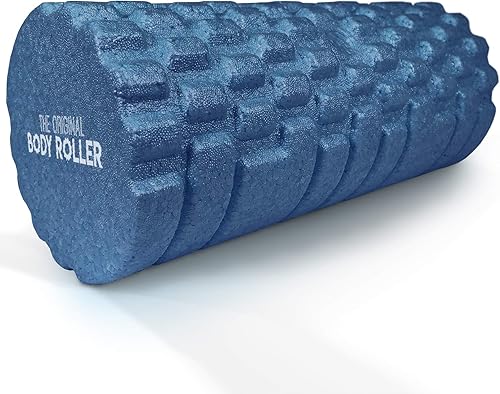
The Original Body Roller High-Density Foam Roller
The Original Body Roller · 4.4★ from 15,975 verified ratings
- 16,000 owners — deep record at a fraction of premium spend
- Firm high-density foam that holds its shape
- Patterned surface for targeted pressure
- Does the core job of a premium roller
Why we picked it: Sometimes the honest answer is that the cheaper one works. This roller delivers the thing rolling is actually for — firm, broad pressure over large muscle groups — with sixteen thousand owners confirming the foam holds its shape rather than packing down into a soft cylinder after a season. Trade-offs: it is a firm roller, so beginners and anyone rolling sensitive areas will find it intense at first (start with less bodyweight on it), and solid foam has no rigid core, which is the durability edge the GRID keeps over everything at this level.
3. Best Set: Foam Roller Set with Muscle Stick & Massage Balls

Foam Roller Set with Muscle Stick & Massage Balls
BORNEW · 4.4★ from 2,140 verified ratings
- Roller, stick and balls in one purchase
- Reaches feet, calves and shoulders a big roller cannot
- Covers travel and desk-side use
- Smallest base here, still four figures
Why we picked it: A full-size roller is bad at exactly two things: small areas and portability. Sets solve both — a stick for calves and quads you can use seated, and lacrosse-style balls for feet, glutes and the spots between the shoulder blades where a cylinder simply cannot reach. For most people this is a complement to a real roller rather than a replacement. Trade-offs: bundled items are usually built to a price, and at 2,140 owners the base is respectable rather than deep.
Specs at a Glance
| Pick | Brand | Type | Best for | Format | Owner base | See price |
|---|---|---|---|---|---|---|
| Best Overall | TriggerPoint | Multi-density textured | Most people | 13 in, rigid core | 23.5k owners at 4.7 | Check price |
| Best Value | The Original Body Roller | Firm high-density | Value | Patterned surface | 16.0k owners at 4.4 | Check price |
| Best Set | BORNEW | Roller + stick + balls | Small areas, travel | Multi-tool | 2.1k owners at 4.4 | Check price |
What Actually Matters
Density decides intensity, not quality. Softer rollers suit beginners, larger bodies and sensitive areas; firmer ones deliver more pressure for experienced users and dense muscle. Neither is better — a roller too intense to relax on is a roller you stop using, which is the only real failure mode.
Texture is a preference, not a mechanism. Bumps and ridges concentrate pressure into smaller areas, which some people love and others find punishing. They do not do anything smooth foam cannot in principle; they simply change where the force goes. Start smooth if you are new.
Length changes what you can roll. Long rollers (roughly 36 inches) let you lie along your spine and roll the upper back in one pass, and they double as a mobility prop. Short rollers (12–13 inches) travel and target limbs better. Many people end up owning one of each — which is cheap to do.
Set expectations at the right level. Rolling reliably reduces the feeling of tightness and can improve range of motion briefly, which is useful before training and pleasant after. Claims about breaking up scar tissue, lengthening fascia or flushing toxins outrun the evidence — our recovery guide covers what actually drives recovery, and rolling is a small, enjoyable part of it. Roll muscle, not joints or bone, and avoid rolling directly on an injury; anything painful and persistent belongs to a clinician. Nothing here is medical advice.
Bottom Line: Which Should You Buy?
Most people: the TriggerPoint GRID. The category benchmark, with a core that outlasts solid foam.
Value: The Original Body Roller. Sixteen thousand owners and firm foam that keeps its shape.
Small areas and travel: the Roller set with stick and balls. Reaches the spots a full-size roller cannot.
Ready to buy?
Jump straight to our picks on Amazon — check the current price at click-through.
Frequently Asked Questions
What are the best foam rollers in 2026?
Short answer: the TriggerPoint GRID 1.0 — 4.7★ from 23,515 ratings. Its case: 23,500 owners at 4.7 — best record in the category. The Original Body Roller is the alternative worth comparing, with Foam Roller Set as the best set. All picks were verified on their live listings; availability and ratings move, so check before you buy.
How long should I foam roll for?
Common practice is roughly 30 to 60 seconds per area, moving slowly, before or after training — the effect on perceived tightness shows up fast and does not improve much with longer sessions. Grinding one spot for five minutes mostly just hurts.
Does foam rolling actually work?
For short-term relief of tightness and a temporary improvement in range of motion, the evidence is reasonable. For changing tissue structure, breaking adhesions, or accelerating recovery in any deep sense, it is much weaker. Buy one for how it makes you feel and move, not for the mechanism stories.
Is it normal for foam rolling to hurt?
Mild discomfort over a tight muscle is normal; sharp pain is not. Never roll directly over joints, bone, or an acute injury, and ease off the IT band if it makes you flinch — that area is more sensitive than useful for most people. Persistent pain is a clinician’s question.
Foam roller or massage gun?
Rollers apply broad pressure using your bodyweight and cost very little; massage guns apply targeted percussion and reach spots without getting on the floor. Our massage gun roundup covers the latter — many people own both and use the roller for legs, the gun for shoulders and back.
Related Guides


How We Research
Picks are researched and written by Mike Callahan based on manufacturer specifications, current Amazon listings, and patterns across verified owner reviews — particularly the negative ones. We are not a testing lab and do not claim to be; our full standard is in the editorial policy. Specifications and included accessories vary by listing, so confirm current details at the retailer before buying.
Note: Two picks carry five-figure owner bases, which in a simple product category is the most reliable durability evidence available. Our original value pick was dropped during the pre-publication check after its listing showed as unavailable. Ratings and availability verified on the live listings August 8, 2026.