 America
The Durasage personal steam sauna is the category’s proven pick — 3,300 owners across years of listings. The Manastin XL steam tent fits people the compact cabins cramp, and the SereneLife infrared tent is the dry-heat option — the most-owned infrared tent on Amazon, on a 4.1 average we discuss plainly. The evidence section keeps every claim honest.
How We Picked
This is a category where our usual 4.3-star floor and the reality of the catalog collide: the deepest owner bases sit at 4.1, and the tents that rate higher have a few dozen owners and unreliable stock. Our two steam picks clear the floor; our infrared pick does not, and we say so on its card rather than pretend the field is stronger than it is. We re-reviewed every pick in September 2026 and replaced an infrared tent that had fallen to 4.2 and open-box-only stock. Among candidates we ranked on owner-base depth, heater wattage and heat-up reports, capacity honesty (a ‘2-person’ tent that fits one comfortable adult is the category’s standard exaggeration), zipper and seam complaints, and safety features: timers, auto shutoff, and remote controls. Traditional wooden saunas are freight-delivered construction projects outside this scope — the buying framework still applies if that is your endgame.
1. Best Overall (Steam): Durasage Portable Personal Steam Sauna
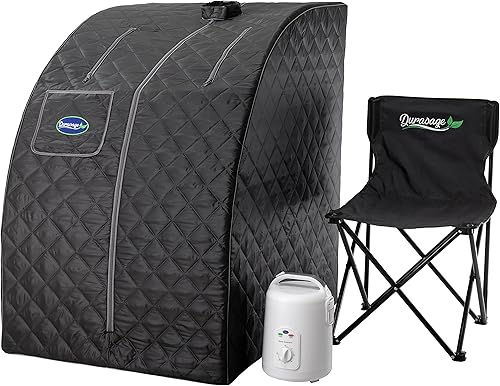
Durasage Portable Personal Steam Sauna
Durasage · 4.3★ from 3,337 verified ratings
- 3,300-owner base across years — the category’s deepest
- Folding chair-style cabin with head-out design
- Steam heat that owners describe as a genuine sweat
- Packs down to closet size between uses
Why we picked it: The Durasage is the portable sauna that has actually been around: thousands of owners, years of listing history, and the head-out steam-cabin design that most people find less claustrophobic than full tents. It produces an honest, heavy sweat within minutes of the steamer boiling. Trade-offs: it is a one-person cabin and snug for larger users, its 4.3 sits at our floor with complaints focused on zipper wear over time, and like every steam unit it raises room humidity — run it somewhere that tolerates that.
2. Best XL Steam: Manastin XL Steam Sauna Tent, 3L/1200W

Manastin XL Steam Sauna Tent, 3L/1200W
Manastin · 4.3★ from 155 verified ratings
- XL tent fits taller and broader users seated fully inside
- 3-liter, 1200-watt steamer heats fast and lasts a session
- Matches the Durasage’s rating on a much younger base
- Folds flat with the included frame
Why we picked it: Capacity honesty is the portable-sauna problem, and the Manastin answers it: an XL tent a six-footer can actually sit inside, with a 3-liter steamer that does not run dry mid-session. Its 4.3 sits level with the Durasage on a far smaller base. Trade-offs: the 155-owner base is early; a full-enclosure tent takes longer to towel out and dry than a head-out cabin; and the bigger chamber costs a few more minutes of heat-up — start the steamer before you stretch.
3. Best Infrared: SereneLife Infrared Sauna Tent, 3 Carbon Panels

SereneLife Infrared Sauna Tent, 3 Carbon Panels
SereneLife · 4.1★ from 2,894 verified ratings
- Dry far-infrared heat from three carbon panels — no steam, no humidity
- Heated foot pad, folding chair and remote with a 60-minute timer
- Full-height tent you can sit or stand in
- Deepest infrared owner base on Amazon, from an established brand
Why we picked it: Infrared is the dry alternative: radiant panels warm you directly at lower air temperatures, nothing boils, and the room stays dry — the practical reasons many people quietly prefer it. The SereneLife is the infrared tent most people have actually owned — close to three thousand ratings from an established brand, with a heated foot pad, a remote and a 60-minute timer built in, and enough height to stand. Stated plainly: its 4.1 average is below the 4.3 bar we hold most picks to. It is here because the no-name infrared tents that rate higher have a few dozen owners apiece and drift in and out of stock, and because the complaints behind that 4.1 — slow heat-up, zipper wear — are the category’s complaints, not this tent’s alone. Pre-heat it, treat the zipper gently, and test it hard inside the return window.
Comparison Table
| Pick | Brand | Heat type | Best for | Controls | Owner base | See price |
|---|---|---|---|---|---|---|
| Best Overall (Steam) | Durasage | Steam, head-out cabin | Most first-time users | Folds small | 3.3k owners at 4.3 | Check price |
| Best XL Steam | Manastin | Steam, XL tent | Taller users, full enclosure | Folds flat | 155 owners at 4.3 | Check price |
| Best Infrared | SereneLife | Infrared, dry heat | Humidity-averse rooms, standing height | Remote + 60-min timer | 2.9k owners at 4.1 — below our usual bar, disclosed | Check price |
What to Look For
Portable tents are not Finnish saunas — and that's okay. A traditional sauna runs far hotter in a wood-lined room; the famous Finnish research on sauna habits and cardiovascular health studied exactly that, and it does not transfer automatically to a 1200-watt tent. What portables genuinely deliver: heavy sweating, heat relaxation, and muscle-warming comfort. Enjoy them for that; treat bigger health claims as unproven at this format.
Steam versus infrared is a lifestyle question. Steam feels like a classic wet sauna and humidifies the room; infrared runs dry, gentler in air temperature, and easier on shared spaces. Neither has evidence of unique health effects over the other at home scale — choose by which environment you will actually use.
Safety features are the spec that matters. A timer with auto shutoff is non-negotiable in a fabric enclosure with a heating element. Hydrate before and after, keep sessions moderate, skip alcohol entirely, and anyone pregnant or managing heart or blood-pressure conditions needs a clinician’s sign-off before any sauna use. Nothing here is medical advice.
Zippers and steamers are the wear points. Portable saunas die by zipper and by steamer scale-up. Owner reviews telegraph both; on any brand, search the one-star column for ‘zipper’ before buying, and run the steamer on distilled water or descale it on schedule.
Buyer’s Guide: How to Choose a Portable Home Sauna
Portable saunas are cheap to buy and expensive to get wrong, because the disappointed ones end up in a closet within a month. The questions below separate the tents that get used from the ones that do not.
1. Steam or infrared: choose the room, not the health claim
A steam tent boils water in a small electric steamer and pipes the vapor into the enclosure; it feels like a wet sauna and it humidifies whatever room it sits in. An infrared tent heats you directly with radiant panels at a lower air temperature, produces no humidity, and is easier to use in a bedroom or a carpeted room. Neither format has evidence of unique health effects over the other at home scale — our heat and cold guide goes through what the research does and does not support. Pick the one whose environment suits your space, and you will use it.
2. Capacity claims are inflated: buy one size up
The category’s standard exaggeration is the “two-person” tent that seats one adult comfortably. Read the internal dimensions, not the marketing, and check them against your seated height and shoulder width. Head-out cabins are more forgiving on height because your head is outside; full-enclosure tents need enough interior height to sit upright without the ceiling touching your hair. Taller and broader users should go straight to an XL model.
3. Heater wattage and steamer capacity decide the session
For steam units, the steamer’s wattage sets how fast it boils and its tank volume sets how long it runs before going dry. A larger tank that lasts a full session without a refill is worth more than any extra fabric feature. For infrared units, look for the total panel wattage and how many panels surround you — front, back and sides — because an infrared tent that only heats from behind leaves the front of your body cold.
4. Controls and safety are not optional
You are sitting in a fabric enclosure with a heating element. A timer with automatic shutoff, a remote or an inside-reachable control, and a stated maximum session length are the minimum. Steam units should have a low-water cutoff on the steamer. If a listing does not mention any of these, that is the answer.
5. Fabric, zipper and frame
Portable saunas fail at the zipper first and at the seams second. Multi-layer insulated fabric holds heat better and survives folding better; a frame that stands on its own without tension on the fabric is easier on the zipper. The one-star reviews of any candidate tell you which brand has a zipper problem — search for the word before buying.
6. Where it will live between sessions
A steam tent needs to be toweled out and left open to dry before it is folded, or it will smell within weeks. A head-out cabin folds like a camp chair and dries quickly; a full tent takes longer. If the sauna will live in a closet, favor the design that dries fastest.
What We’d Skip
Tents whose recent reviews describe steamers dying or zippers splitting. Those are the two failures that end a portable sauna’s life, and neither is repairable at home. Volume is not the same as satisfaction — read the most recent one-star reviews of any candidate before trusting a big overall count, including the ones on this page.
Any steam unit without a low-water cutoff. A steamer that keeps heating an empty tank is a hazard and a short-lived appliance. This is the one feature we would refuse to compromise on.
Health claims in the listing. Detox, weight loss, and the cardiovascular findings from Finnish sauna research are routinely borrowed by tent listings. The research studied traditional high-heat rooms used for decades. A portable delivers sweating, warmth and relaxation — buy it for those, and treat anything grander as unproven.
Wooden cabin kits sold as “portable”. A real wooden sauna is a freight delivery, an electrical circuit and a weekend of assembly. It can be a fine purchase; it is not a portable sauna, and it is outside what this page can vouch for.
Setup, Space and Upkeep
Where to put it. A steam tent needs a floor that tolerates moisture and a room that tolerates humidity — a bathroom, a tiled utility room or a garage corner is ideal; a carpeted bedroom is not. Infrared tents are more forgiving and can sit on carpet with the included floor mat. Either way, keep the heater and its cord clear of the fabric and away from anything that should not get hot.
Water. Run steamers on distilled water or descale them on a schedule. Scale is what kills steamers, and hard-water households see it within weeks. A dose of white vinegar in an empty steamer followed by a rinse is the standard descaling routine; the manual will give the interval.
Pre-heat. Start the steamer or panels before you stretch, change or fill a water bottle. Compact cabins reach working heat in a few minutes; larger tents and infrared units take longer. Owner reviews that complain a sauna “never gets hot” are often reviews of a sauna used before it was ready.
After each session. Towel the inside dry, leave it open to air, and fold it only once the fabric is dry. Empty the steamer’s tank rather than leaving water to sit. This one habit is the difference between a tent that lasts years and one that smells by autumn.
Session habits. Hydrate before and after, keep sessions moderate, and never combine a sauna with alcohol. Anyone pregnant or managing a heart or blood-pressure condition needs a clinician’s sign-off before any sauna use. Nothing here is medical advice.
Who Should Buy Something Else
You want to lie down. A sauna blanket delivers infrared heat while you lie flat, stores rolled up, and suits people who want to read or nap through a session rather than sit upright.
You want the cold side of the routine. Contrast therapy is heat followed by cold. If the cold half interests you, our cold plunge tub roundup takes the same evidence-first approach, and the heat and cold guide explains how to combine them sensibly.
You are after muscle recovery specifically. Heat feels good on sore muscles, but a massage gun or a foam roller targets the tissue directly and takes less time. Our muscle soreness guide sorts what helps from what is hype.
You have the space and budget for the real thing. A traditional wooden sauna is a different purchase — a construction project with an electrician involved — and the framework on this page still applies: heater output, capacity honesty and safety controls decide it.
Our Final Take
First portable sauna: the Durasage. The proven head-out cabin with years of owner history.
Taller users and full enclosure: the Manastin XL. The tent that fits real adults, on a rating level with the Durasage.
Dry heat preference: the SereneLife infrared. Full height, established brand, no humidity — a 4.1 average, flagged.
Ready to buy?
Jump straight to our picks on Amazon — check the current price at click-through.
Your Questions, Answered
What are the best home saunas in 2026?
Our pick for most people is the Durasage Portable Personal — 3,300-owner base across years — the category’s deepest. Manastin XL Steam Sauna is the best xl steam, and SereneLife Infrared Sauna Tent is the best infrared. Every pick here is a current Amazon listing we re-checked before publishing, so confirm specifications at the retailer before buying.
Do portable saunas give the same benefits as real saunas?
They reliably produce sweating and heat relaxation. The long-term cardiovascular associations in sauna research come from traditional high-heat rooms used for decades in Finland — extrapolating those to a portable tent is a leap the evidence has not made. Buy a portable for how it feels, not for headlines.
How hot do portable saunas get?
Steam cabins operate around typical steam-bath conditions — well below a traditional sauna’s air temperature but with humidity doing the work; infrared tents run lower air temperatures still while heating you radiantly. Both produce a serious sweat; neither replicates the Finnish-sauna heat blast.
Are saunas safe to use every day?
Healthy adults tolerate regular moderate sessions well, with hydration doing the heavy lifting. Alcohol and saunas do not mix, ever, and pregnancy or cardiovascular conditions make frequency and temperature questions for a clinician rather than a review site.
Steam sauna or sauna blanket?
Blankets (see our sauna blanket roundup) win on storage and lying-down comfort; tents and cabins win on sitting posture and a more sauna-like experience. The evidence caveats are identical for both — modest, honest benefits; inflated marketing.
How long does a portable sauna take to heat up?
Compact steam cabins are typically at working heat within roughly ten minutes of the steamer boiling; larger tents and infrared units take somewhat longer because there is more air or more fabric to warm. Start the heater before you get ready and the wait disappears.
Can I use a portable sauna on carpet?
Infrared tents generally can, on the included floor mat. Steam tents are a poorer fit for carpet because condensation drips and humidity soaks in — a tiled floor, a bathroom or a garage corner is the better home. Whatever the floor, keep the heater and cord clear of the fabric.
How much electricity does a portable sauna use?
Most portable units draw about as much as a hair dryer or a small space heater while running, and plug into a standard household outlet. Run it alone on the circuit rather than sharing with another high-draw appliance, and skip extension cords.
Related Guides


How We Research
Picks are researched and written by Mike Callahan based on manufacturer specifications, current Amazon listings, and patterns across verified owner reviews — particularly the negative ones. We are not a testing lab and do not claim to be; our full standard is in the editorial policy. Specifications and included accessories vary by listing, so confirm current details at the retailer before buying.
Note: The infrared pick sits at 4.1, below the 4.3 bar we hold most picks to; it is disclosed on the card and in the table. Capacity claims run optimistic across the class. Ratings verified on the live listings September 7, 2026.