 America
The REP Fitness slam balls are the pick if you want a shell built by a strength brand and the quietest, deadest landing here. Yes4All’s slam balls have a 14,000-owner record that answers the durability question better than any spec sheet, and ProsourceFit’s tread-textured balls are the ones to grab if sweaty hands keep losing the smooth shells.
Our Selection Criteria
A slam ball has one failure mode — the shell splits — and owners report it loudly, so review history did most of the work here. We looked for seam complaints, sand leaks, and balls that arrived under weight, held the 4.3-star floor, and under our premium-first standard put a strength-equipment brand first with the thin-review-base disclosure that goes with it. All three picks are dead-bounce balls; anything that rebounds is a medicine ball wearing the wrong label.
1. Best Overall: REP Fitness Slam Balls, 10–100 lb

REP Fitness Slam Balls, 10–100 lb
REP Fitness · 4.5★ from 267 verified ratings
- Thick textured shell from a strength-equipment brand
- Sizes up to 100 lb for genuinely heavy carries and throws
- Dead bounce: the ball stops where it lands
- Smaller review base (267) — ranked on brand record
Why we picked it: REP’s slam balls have the thickest-feeling shell of the three and a surface texture that stays grippable when your hands are wet, which matters more than it sounds once you are twenty slams into a set. The range runs to 100 lb, so the same product covers over-the-shoulder throws and loaded carries, not just floor slams. Trade-offs: a 267-owner review base is a fraction of Yes4All’s, so this pick is ranked on REP’s record as a strength brand and disclosed as such, and the heavier sizes are priced like the serious equipment they are.
2. Most Proven: Yes4All Slam Balls, 10–40 lb, Sand-Filled PVC

Yes4All Slam Balls, 10–40 lb, Sand-Filled PVC
Yes4All · 4.7★ from 14,091 verified ratings
- 14,000 owners at 4.7 — the deepest record on this page
- Durable PVC shell with a textured grip surface
- Sand fill that stays dead on impact
- Sizes from 10 to 40 lb cover most home use
Why we picked it: Fourteen thousand people have slammed this ball into their floors and rated it 4.7, which is as close to a durability test as a review base gets. The shell is a thick textured PVC that has held up to years of reviews, the sand fill lands dead, and the 10 to 40 lb range covers everything from warm-ups to hard conditioning. Trade-offs: the range stops at 40 lb, so lifters wanting heavy throws and carries will outgrow it, and the texture is less aggressive than REP’s when your hands are soaked.
3. Best Grip: ProsourceFit Tread Slam Balls, 5–50 lb
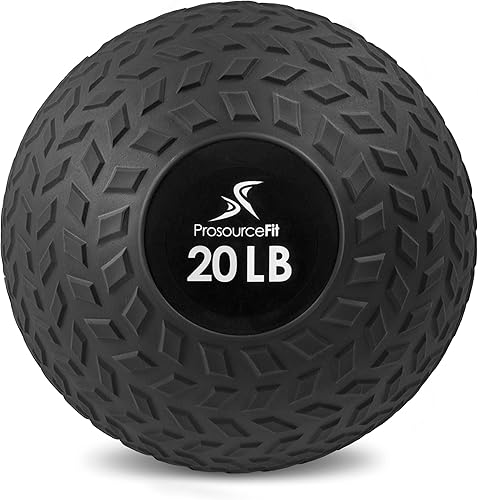
ProsourceFit Tread Slam Balls, 5–50 lb
ProsourceFit · 4.7★ from 2,884 verified ratings
- Tire-tread texture keeps a sweaty grip
- Sizes from 5 to 50 lb, including a true beginner weight
- 2,900 owners at 4.7
- Good option for rotational throws and partner work
Why we picked it: The tread pattern is the point: a raised tire-style texture that gives fingers something to hold when the smooth shells get slick. That makes it the right ball for rotational throws, wall-facing chest passes, and anything where the ball leaves your hands at speed. It also runs down to 5 lb, which is the honest starting weight for a lot of beginners. Trade-offs: the tread collects grit from a garage floor, and some owners note the heavier sizes arrive a pound or two off — normal for sand-filled balls, but worth knowing.
Specs at a Glance
| Pick | Brand | Weight range | Shell | Grip texture | Owner base | See price |
|---|---|---|---|---|---|---|
| Best Overall | REP Fitness Slam Balls | 10–100 lb | Thick rubber | Textured | 267 owners at 4.5 | Check price |
| Most Proven | Yes4All Slam Balls | 10–40 lb | Textured PVC | Textured | 14.1k owners at 4.7 | Check price |
| Best Grip | ProsourceFit Tread Slam Balls | 5–50 lb | Rubber | Tire tread | 2.9k owners at 4.7 | Check price |
What Actually Matters
Dead bounce is non-negotiable. A slam ball must stop where it lands. Anything that rebounds toward your face on a hard slam is a medicine ball, and using it for slams is how people get hurt. All three picks here are sand-filled and land dead.
Start lighter than you think. Slams are a speed movement: a 20 lb ball thrown hard does more than a 40 lb ball lobbed. Most men do well starting at 20 to 25 lb, most women at 10 to 15, and the ball you can accelerate for a full minute is the right one.
Shell thickness beats everything else. The shell is what you are buying. Thin shells split at the seam within months of hard use; thick ones last years. Owner reviews mentioning ‘split’ or ‘leaking sand’ are the red flag to search for.
Texture matters once you sweat. A smooth ball is fine for the first five minutes. Tread or pebble texture keeps the ball in your hands through a conditioning set, and it is the main real difference between the three picks above.
Bottom Line: Which Ball?
Heaviest throws and a strength-brand shell: the REP slam balls. Sizes to 100 lb and the dead-est landing here.
The proven all-rounder: the Yes4All slam balls. Fourteen thousand owners have already run the durability test.
Sweaty hands and rotational work: the ProsourceFit tread slam balls. The tread texture is what you are paying for.
Ready to buy?
Jump straight to our picks on Amazon — check the current price at click-through.
Common Questions, Answered
What are the best slam balls in 2026?
We rank the REP Fitness Slam Balls first — thick textured shell from a strength-equipment brand — followed by Yes4All Slam Balls and ProsourceFit Tread Slam Balls. Those three cover the range most buyers actually choose between. Ratings quoted on this page were captured from the live Amazon listings on the date shown above.
What is the difference between a slam ball and a medicine ball?
A slam ball is sand-filled and built to land dead when thrown into the floor. A medicine ball is firmer, bounces, and is meant for passing, catching and wall throws. Using a medicine ball for slams is dangerous because it rebounds; using a slam ball for wall throws is disappointing because it does not.
How heavy should a slam ball be?
Lighter than instinct says. Slams train speed and power, so the ball should be one you can accelerate hard for a full set: roughly 20–25 lb for most men, 10–15 lb for most women, heavier only once every rep is still fast. Heavy balls are for carries and over-the-shoulder throws, not floor slams.
Can I use a slam ball on a hardwood floor?
On a rug or mat, yes; on bare hardwood, you will dent the boards over time. Concrete and rubber flooring are the natural surfaces. A thick exercise mat over a hard floor solves most apartment situations.
Do slam balls break?
Cheap ones do, usually at the seam. Thick-shelled balls from the brands above have review histories measured in years rather than months. If a listing has multiple reviews mentioning leaking sand, keep scrolling.
Related Guides


How We Research
Picks are researched and written by Mike Callahan based on manufacturer specifications, current Amazon listings, and patterns across verified owner reviews — particularly the negative ones. We are not a testing lab and do not claim to be; our full standard is in the editorial policy. Specifications and included accessories vary by listing, so confirm current details at the retailer before buying.
Note: The REP Fitness listing has a modest review base (267) because REP sells most of its equipment direct; it is ranked first on the brand’s record and shell quality, per our premium-first standard, and disclosed as such. Sand-filled balls commonly arrive a pound or two off nominal weight. Ratings and availability verified on the live listings August 25, 2026.