 America
The Element 26 self-locking nylon belt is the pick for mixed and functional training — 24,000 owners strong. The Gymreapers leather belt is the uniform-width strength-training standard, and RDX’s padded leather belt is the comfort pick for lifters who find stiff leather punishing.
How We Chose
We held the 4.3-star floor and picked the leading belt in each of the three genuinely different constructions rather than three variations on one. Ranking inside each lane weighed buckle and lever failure reports, edge finishing and break-in complaints on leather, Velcro lifespan on nylon, and sizing-accuracy feedback — the single biggest source of returns in this category. Our companion guide explains the bracing technique that makes any of these worth wearing; none of this is medical advice, and lifters with back issues should start with a professional, not a purchase.
1. Best Overall (Nylon): Element 26 Self-Locking Weight Lifting Belt

Element 26 Self-Locking Weight Lifting Belt
Element 26 · 4.5★ from 24,592 verified ratings
- Self-locking buckle holds under load, releases instantly
- Uniform 4-inch nylon — consistent brace all around
- 24,000-owner base across serious training communities
- Suits mixed training, functional fitness and quick transitions
Why we picked it: Nylon belts won mixed training for a reason: the Element 26’s self-locking buckle cinches to exactly the tightness you want, holds there under a max brace, and releases in one motion between movements — the workflow leather prongs cannot match. Its owner base is the largest here by a wide margin. Trade-offs: nylon flexes more than thick leather at limit-strength loads, and Velcro-adjacent closures are consumables measured in years — owner reports on this one’s lifespan are unusually good, but physics is physics.
2. Best Leather: Gymreapers Leather Weightlifting Belt
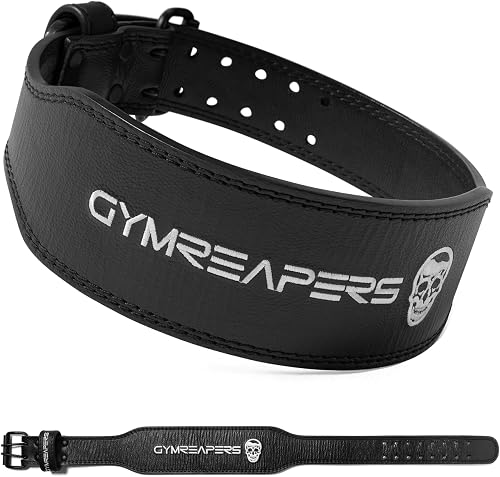
Gymreapers Leather Weightlifting Belt
Gymreapers · 4.7★ from 1,619 verified ratings
- Uniform-width leather in the strength-training mold
- Roller buckle with reinforced stitching
- Best average of our three picks at 4.7
- Breaks in to a rigid, repeatable brace wall
Why we picked it: For squats and deadlifts, a uniform-width leather belt is the standard our belt guide explains, and Gymreapers’ is the strongest owner record we found in the format on Amazon: 4.7, edge finishing that draws none of the sharp-edge complaints common at this tier, and stitching that holds at the stress points. Trade-offs: leather demands break-in measured in weeks, prong buckles are slower between sets, and its rigidity is exactly what high-rep circuit training does not want — that is the nylon pick’s job.
3. Best Padded: RDX Padded Leather Weight Lifting Belt

RDX Padded Leather Weight Lifting Belt
RDX · 4.4★ from 11,306 verified ratings
- Padded lumbar section in cowhide leather
- 4-inch and 6-inch width options on the listing
- 11,000-owner base across years of listings
- Comfort-first shape for general gym training
Why we picked it: Some lifters never make peace with a rigid powerlifting belt, and the RDX is built for them: padded lumbar contact, a tapered front that does not dig on hinge movements, and a five-figure owner base. It is the belt for general gym training where comfort keeps the belt on the body. Trade-offs stated plainly: padding compresses, so the brace wall is softer than uniform leather — strength purists should read our belt guide’s section on what a belt actually does and pick the Gymreapers instead.
The Full Comparison
| Pick | Brand | Construction | Best for | Profile | Owner base | See price |
|---|---|---|---|---|---|---|
| Best Overall (Nylon) | Element 26 | Nylon, self-locking | Mixed/functional training | 4 in uniform | 24.5k owners | Check price |
| Best Leather | Gymreapers | Leather, roller prong | Squats, deadlifts | Uniform width | 1.6k at 4.7 | Check price |
| Best Padded | RDX | Padded leather | General gym training | Tapered, padded | 11.3k owners | Check price |
Before You Buy
Match construction to your training, not your identity. Heavy barbell strength work rewards uniform leather; mixed and time-pressured training rewards self-locking nylon; comfort-first general training tolerates padding. Our lifting belt guide walks the mechanics behind each.
Size by navel measurement, never trouser size. Measure your waist at the navel, relaxed, over the belly you brace with — then use that brand’s chart. Vanity sizing from trousers is the top cause of returned belts, and a mis-sized belt cannot be braced against properly.
Buckles fail before belts do. Prong holes elongate, lever screws loosen, Velcro wears. Scan critical reviews for the closure, specifically — leather itself almost never fails, which is why closure reports are the real durability signal.
Width and thickness are brace geometry. A 4-inch uniform belt fits most torsos; short torsos may find 6-inch backs dig into ribs on the hinge. Thickness beyond 10 mm buys rigidity most lifters never use — covered, with the myths, in the companion guide.
The Verdict: Which One Is Right for You?
Mixed training and fast transitions: the Element 26 nylon. The self-locking workflow and the biggest proven base in the roundup.
Serious squat and deadlift training: the Gymreapers leather. The uniform-width standard, executed with the best record here.
Comfort-first general training: the RDX padded. The belt that stays on the body — know its softer brace wall.
Ready to buy?
Jump straight to our picks on Amazon — check the current price at click-through.
Common Questions, Answered
What are the best lifting belts in 2026?
We rank the Element 26 Self-Locking Weight first — self-locking buckle holds under load, releases instantly — followed by Gymreapers Leather and RDX Padded Leather Weight. Those three cover the range most buyers actually choose between. Ratings quoted on this page were captured from the live Amazon listings on the date shown above.
Which belt should a beginner buy?
First, read our belt guide on whether you need one yet — the brace comes before the belt. When you do buy: mixed training favors the nylon pick; barbell-focused programs favor the leather. Sizing by navel measurement matters more than the brand choice.
Are expensive powerlifting belts worth it over these?
Competition belts add thicker leather, lever buckles, and federation approval stamps — meaningful if you compete or pull elite loads, invisible for most home training. Every belt here braces properly when sized and worn correctly.
How tight should a lifting belt be?
Snug enough that your braced belly presses firmly into it all the way around, loose enough to take a full belly breath — most lifters land one notch looser than instinct. The full technique is in our lifting belt guide.
Can I wear a belt for every exercise?
You can; you should not. Belts earn their keep on heavy compound sets where trunk rigidity limits you — wearing one for curls teaches dependence and nothing else. Reserve it for the sets that need it.
Related Guides


How We Research
Picks are researched and written by Mike Callahan based on manufacturer specifications, current Amazon listings, and patterns across verified owner reviews — particularly the negative ones. We are not a testing lab and do not claim to be; our full standard is in the editorial policy. Specifications and included accessories vary by listing, so confirm current details at the retailer before buying.
Note: Sizing charts differ by brand and are the top return driver in this category — measure at the navel and check the specific chart on the listing. Ratings and owner counts verified on the live listings August 5, 2026.