 America
The Gorilla Mats large mat is the pick if you train in shoes on a hard floor — one piece, no migrating seams, built for burpees and dumbbells. ProsourceFit’s puzzle tiles cover a whole equipment corner for less, and the Amazon Basics extra-thick mat — with the biggest owner base on this page — is the one you lie on for core work and stretching.
How We Chose These
Mats fail in predictable ways — seams that creep apart, foam that dents permanently under a bench foot, surfaces that turn slick with sweat — and all three show up loudly in owner reviews within months, so we weighted long review histories heavily. We held the 4.3-star floor, kept one pick per format rather than three near-identical rectangles, and under our premium-first standard the category’s specialist brand takes the top slot with the strongest rating on the page to back it up.
1. Best Overall: Gorilla Mats Large Exercise Mat (6'x4')
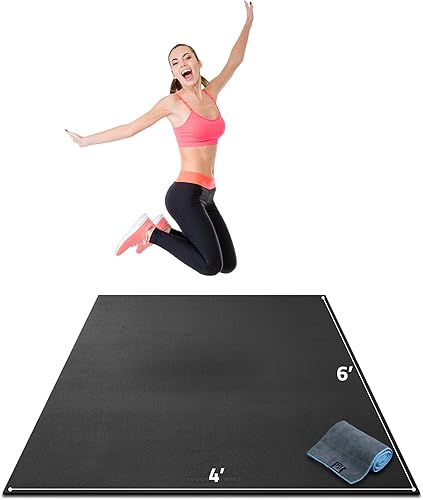
Gorilla Mats Large Exercise Mat (6'x4')
Gorilla Mats · 4.7★ from 4,345 verified ratings
- One-piece — no seams to creep apart mid-workout
- Dense enough for shoes, dumbbells and burpees
- Sized for a real training footprint, 6'x4' up to 10'x4'
- Category specialist with a 4.7 record across 4,300 owners
Why we picked it: A large one-piece mat solves the problem tiles cannot: nothing shifts, nothing separates, and there is no seam under your landing foot. Gorilla Mats builds specifically for shoes-on home training — the surface takes lunges, jumping and equipment feet without tearing, and it rolls up when the living room needs to be a living room again. Trade-offs: it is the most expensive way to cover a given area, and a rolled mat this size stores like a short log — you need somewhere to put it.
2. Best for Equipment Corners: ProsourceFit Exercise Puzzle Mat, ½-inch EVA Tiles

ProsourceFit Exercise Puzzle Mat, ½-inch EVA Tiles
ProsourceFit · 4.6★ from 6,098 verified ratings
- Covers a full corner or room modularly
- Half-inch EVA takes benches, bikes and racks day to day
- Replace one damaged tile, not the whole floor
- 6,000-owner record at 4.6
Why we picked it: Tiles are the right call when the mat stays down permanently under equipment. ProsourceFit’s interlocking half-inch EVA covers whatever footprint you need, cuts cleanly around posts, and when one tile eventually dents or tears you replace that tile rather than the floor. Trade-offs: EVA foam is not rubber — a loaded squat rack will mark it permanently (our home gym flooring roundup covers rubber for that job), and seams can work apart on very smooth floors under aggressive footwork.
3. Best Personal Mat: Amazon Basics Extra Thick Exercise Mat, ½-inch
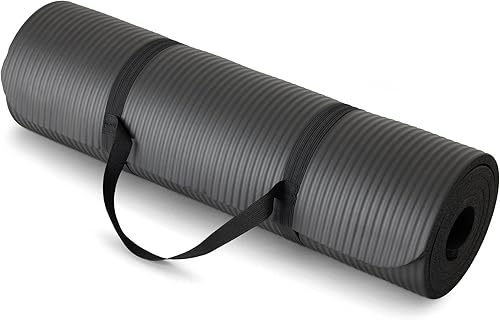
Amazon Basics Extra Thick Exercise Mat, ½-inch
Amazon Basics · 4.6★ from 70,168 verified ratings
- 70,000 owners at 4.6 — the deepest record on this page
- Half-inch foam actually cushions spine and knees
- Rolls up with a carry strap in seconds
- The mat for core work, stretching and floor days
Why we picked it: For everything you do lying down — core work, stretching, mobility — a thick personal mat beats both other formats, and this is the classic of the type: half an inch of foam, a carry strap, and a seventy-thousand-owner history that leaves very little unknown about how it holds up. Trade-offs: the soft NBR foam that makes it comfortable makes it wrong for standing barbell work or shoes, and like all foam of this type it compresses at elbow-point pressure. It is a mat for bodies, not equipment.
Specs at a Glance
| Pick | Brand | Format | Best for | Thickness | Owner base | See price |
|---|---|---|---|---|---|---|
| Best Overall | Gorilla Mats | One-piece large mat | Shoes-on training | 1/4 in | 4.3k owners at 4.7 | Check price |
| Best for Equipment Corners | ProsourceFit | Interlocking EVA tiles | Permanent equipment zones | 1/2 in | 6.1k owners at 4.6 | Check price |
| Best Personal Mat | Amazon Basics | Roll-up personal mat | Floor work & stretching | 1/2 in | 70.2k owners at 4.6 | Check price |
What Actually Matters
Format first, brand second. A large mat protects floors during standing training; tiles floor a permanent zone; a personal mat cushions your body. Decide which job you are hiring for before comparing anything else — most disappointment in this category is a format mismatch, not a quality problem.
Thickness is a trade, not a score. Thicker is better under your spine and worse under your feet — half-inch foam that feels luxurious in a crunch makes single-leg work wobbly. Quarter-inch density suits standing training; half-inch suits floor work. Nobody needs the two-inch novelty listings.
Density beats thickness. A dense quarter-inch mat outperforms soft one-inch foam for almost everything except lying down. If a listing brags about softness for a training mat, that is a warning, not a feature.
Know what EVA foam cannot do. Puzzle tiles handle bodyweight, benches and cardio machines well, but concentrated steel point-loads — racks, loaded barbells — dent them for good. For a barbell corner, rubber flooring is the right product, and we cover it separately.
Bottom Line: Which Mat Should You Buy?
Training in shoes on hard floor: the Gorilla Mats large mat. One piece, no seams, made exactly for this.
Flooring an equipment corner: the ProsourceFit puzzle tiles. Modular, replaceable, and the affordable way to cover area.
Core work and stretching: the Amazon Basics extra-thick mat. Seventy thousand owners say the obvious pick is fine.
Ready to buy?
Jump straight to our picks on Amazon — check the current price at click-through.
Frequently Asked Questions
What are the best exercise mats in 2026?
The Gorilla Mats is our best overall (4.7★ from 4,345 ratings): one-piece — no seams to creep apart mid-workout. If that is not the right fit, ProsourceFit covers the best for equipment corners case and Amazon Basics the best personal mat. We verify listings rather than lab-test, which is why the reasoning is on the page.
What is the difference between an exercise mat and a yoga mat?
Thickness and density. Yoga mats run thin (a few millimeters) and grippy so you can balance; general exercise mats run half an inch or more for cushioning under knees, spine and elbows. Doing yoga on a thick soft mat is wobbly; doing crunches on a thin yoga mat is uncomfortable. They are different tools.
How thick should an exercise mat be?
For floor work — core, stretching, mobility — around half an inch is the sweet spot. For standing training in shoes, thinner and denser (about a quarter inch) is more stable. Very thick soft mats look inviting but make anything on one leg harder.
Can I put gym equipment on foam mats?
Benches, bikes and bodyweight are fine on quality EVA tiles. Squat racks and loaded barbells are not — steel feet concentrate weight into small points that permanently dent foam. Use rubber flooring under serious iron; our home gym flooring roundup covers it.
Do large exercise mats damage hardwood floors?
Quality mats protect the floor rather than harm it, but trapped grit can scratch and some cheap PVC backings can discolor certain finishes over years. Sweep before laying the mat down, and if the mat lives in one spot permanently, lift it occasionally to let the floor breathe.
Related Guides


How We Research
Picks are researched and written by Mike Callahan based on manufacturer specifications, current Amazon listings, and patterns across verified owner reviews — particularly the negative ones. We are not a testing lab and do not claim to be; our full standard is in the editorial policy. Specifications and included accessories vary by listing, so confirm current details at the retailer before buying.
Note: The Gorilla Mats and ProsourceFit review bases (4,345 and 6,098) are mid-sized rather than huge; both brands are long-established in the category and the ratings have held steady across years of reviews. Ratings and availability verified on the live listings August 18, 2026.